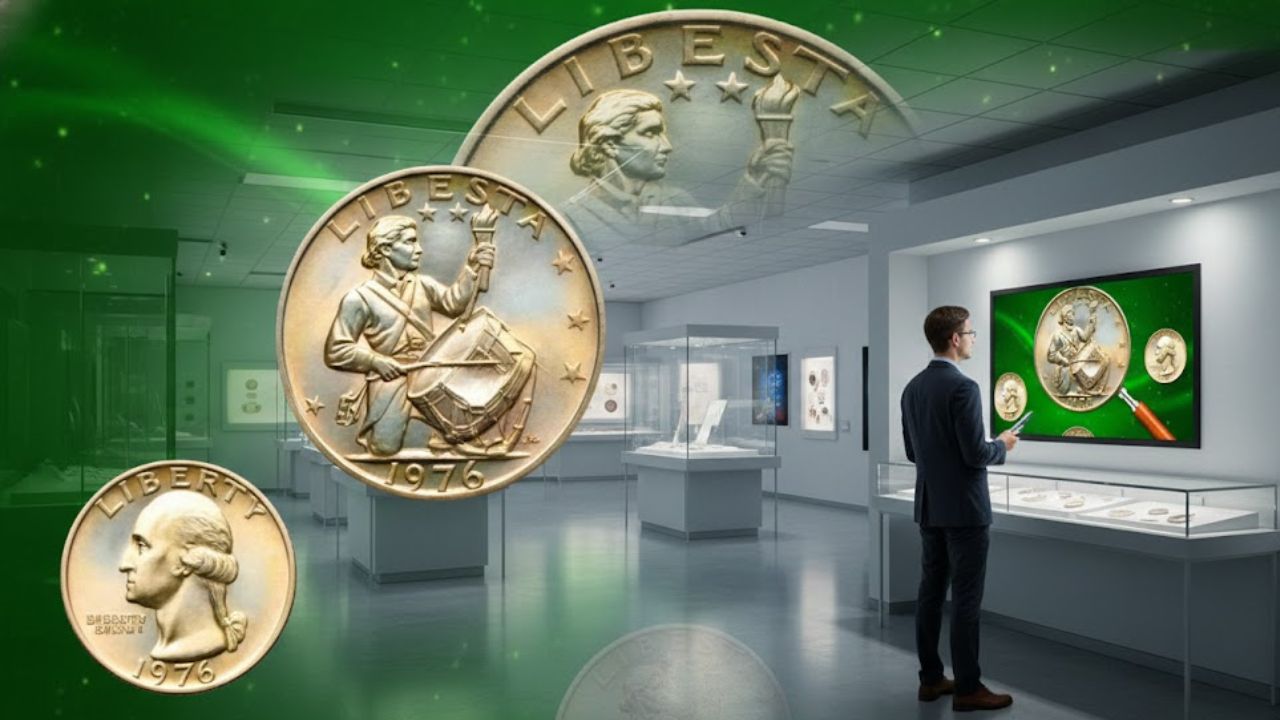
Rare Bicentennial Quarter: The Bicentennial Quarter is one of the most collected modern U.S. coins, created to honor America’s 200th year of independence. Featuring the dual date 1776 1976 and a distinctive colonial drummer reverse, this special Washington quarter stands apart from regular issues. Although the majority remain worth only face value, certain rare Bicentennial Quarter errors and varieties have become valuable treasures in the coin collecting world.
Rare Bicentennial Quarter Errors and Estimated Collector Value Guide
| Error or Variety | Key Features to Identify | Mint Location | Estimated Value Range |
|---|---|---|---|
| Doubled Die Obverse | Noticeable doubling on 1776 1976 or LIBERTY | P or D | $150 to $3,500+ |
| Doubled Die Reverse | Doubling on drummer or reverse text | P or D | $200 to $2,500+ |
| Off Center Strike | Partial design missing but full date visible | Any | $75 to $5,000+ |
| Clipped Planchet | Curved or straight clip on edge | Any | $50 to $1,500+ |
| Wrong Planchet | Struck on dime or foreign blank | Any | $1,000 to $10,000+ |
| Missing Clad Layer | Copper core visible, lighter weight | P or D | $300 to $3,000+ |
| Silver 40 Percent Variety | Heavier silver composition | S | $10 to $500+ depending on grade |
| Proof Error | Error on mirror-like proof coin | S | $500 to $7,500+ |
Why Rare Bicentennial Quarter Errors Matter to Collectors
Mint mistakes transform ordinary coins into collectible highlights. Because Bicentennial quarters were produced in enormous quantities, any manufacturing flaw that escaped inspection instantly became unusual. These coins were never meant to leave the Mint in flawed condition, which adds intrigue and scarcity.
Collectors are especially attracted to dramatic and clearly visible errors. Strong doubling, bold off center strikes, and wrong planchet examples often bring competitive bidding at auction.
Bicentennial Quarter Production and Mint Varieties
The Bicentennial Quarter was produced at three different facilities. Philadelphia issued coins without a mintmark, Denver struck coins marked with a D, and San Francisco released proof and special 40 percent silver versions marked with an S.
Most coins were made from copper nickel clad metal, but silver collector versions were sold in special sets. Knowing the mintmark and metal composition is essential when evaluating potential value.
Doubled Die Obverse Bicentennial Quarter Errors
A Doubled Die Obverse occurs during the die manufacturing process. This creates a distinct duplication in lettering or numbers. On Bicentennial quarters, doubling may appear in the dual date, the word LIBERTY, or in Washington’s features.
True doubled dies show consistent separation rather than simple shadowing. Well-preserved examples are highly desirable and can sell for substantial premiums.
Doubled Die Reverse Bicentennial Quarter Varieties
Although less frequently encountered, Doubled Die Reverse errors are also collectible. Look closely at the drummer, torch, and surrounding inscriptions. Clear doubling that appears raised and uniform signals a genuine mint variety rather than post-mint damage.
Strong reverse doubling examples are especially appealing due to the unique Bicentennial design.
Off Center Strike Bicentennial Quarter Errors
An off center strike happens when the coin blank shifts during the striking process. This results in a portion of the design being missing. Coins that still display the complete 1776 1976 date while showing dramatic misalignment tend to command the highest prices.

The greater the visible displacement, the stronger the collector interest.
Clipped Planchet Bicentennial Quarter Errors
Clipped planchet errors occur before striking, when the metal blank is improperly cut from the sheet. These coins display a missing curved or straight section along the edge.
Authentic clips show smooth, curved metal flow and design distortion near the missing portion. Clean and well-defined examples are actively collected.
Wrong Planchet Bicentennial Quarter Errors
Among the most valuable Bicentennial Quarter errors are wrong planchet strikes. These coins were accidentally struck on blanks intended for another denomination or even foreign coins.
They may appear smaller, thinner, or lighter than a normal quarter. Accurate weight measurement is a key factor in identification. Because of their rarity, these pieces can bring significant auction results.
Silver Bicentennial Quarter Varieties
San Francisco produced 40 percent silver Bicentennial quarters for collectors. While most remain in sets, some have entered circulation. Silver examples weigh slightly more and lack the copper edge stripe seen on clad coins.
High grade silver quarters or those with additional mint errors are worth more than standard circulation strikes.
Missing Clad Layer Bicentennial Quarter Errors
Clad coins consist of layered metals. When one outer layer is missing, the quarter appears copper colored or unusually pale. These coins are lighter than standard issues and often show uneven coloration.
Because they are easy to recognize and uncommon, missing clad layer errors are popular with collectors.
Broadstrike Bicentennial Quarter Errors
Broadstrike errors happen when the collar that shapes the coin’s rim fails to engage. The coin spreads outward during striking and lacks a defined edge.
Bicentennial broadstrikes with sharp design details and minimal damage are collectible and worth a premium over face value.
Die Crack and Die Break Bicentennial Quarter Errors
Over time, minting dies develop cracks. These flaws appear as raised lines across the coin’s surface. Larger breaks, sometimes called cud errors, create thick raised areas along the rim.
Prominent die breaks on Bicentennial quarters can increase value, especially when dramatic and visually appealing.
Proof Bicentennial Quarter Error Coins
Proof Bicentennial quarters were struck with polished dies and specially prepared blanks. Because they undergo strict quality checks, errors on proof coins are rare.
When proof coins display doubling, off center strikes, or other unusual flaws, they often achieve strong prices in the collector market.
How to Identify Genuine Bicentennial Quarter Errors
Careful inspection is critical. True mint errors show consistent characteristics and raised metal patterns rather than random scratches or damage. Comparing weight, thickness, and diameter with a standard quarter helps confirm authenticity.
Magnification and reference guides are valuable tools for verification.
The Importance of Condition in Bicentennial Quarter Value
Even rare Bicentennial Quarter errors are affected by condition. Coins with minimal wear, original luster, and no cleaning typically bring higher prices. Harsh cleaning or damage can significantly reduce market value.
Preserving coins properly helps maintain long term collector interest.
Common Mistakes When Searching for Rare Bicentennial Quarter Errors
Many beginners mistake post-mint damage for genuine errors. Bent coins, scratched surfaces, or environmental corrosion are not mint mistakes. Cleaning coins in an attempt to improve appearance can permanently reduce value.
Patience and research are essential when identifying hidden gems.
When to Seek Professional Coin Authentication
If you suspect you have a valuable Bicentennial Quarter error, professional grading is recommended. Certification confirms authenticity and assigns a grade based on condition. Authenticated coins are easier to sell and often achieve stronger prices.
Professional evaluation is especially important for wrong planchet and high value proof errors.
Final Verdict on Rare Bicentennial Quarter Errors and Hidden Gems
Most Bicentennial quarters remain common pocket change, but rare error varieties can carry impressive value. Doubled dies, off center strikes, wrong planchet errors, and silver varieties are among the most sought after types. With careful study and attention to detail, collectors may discover valuable coins hiding in ordinary circulation.
The Bicentennial Quarter continues to attract interest because it blends American history with the thrill of finding something uncommon in everyday change.
Disclaimer
Coin values fluctuate depending on market demand, condition, and authentication status. The price ranges mentioned are estimates based on past sales and collector trends. Always consult a qualified numismatic professional or reputable grading service before making buying or selling decisions.
