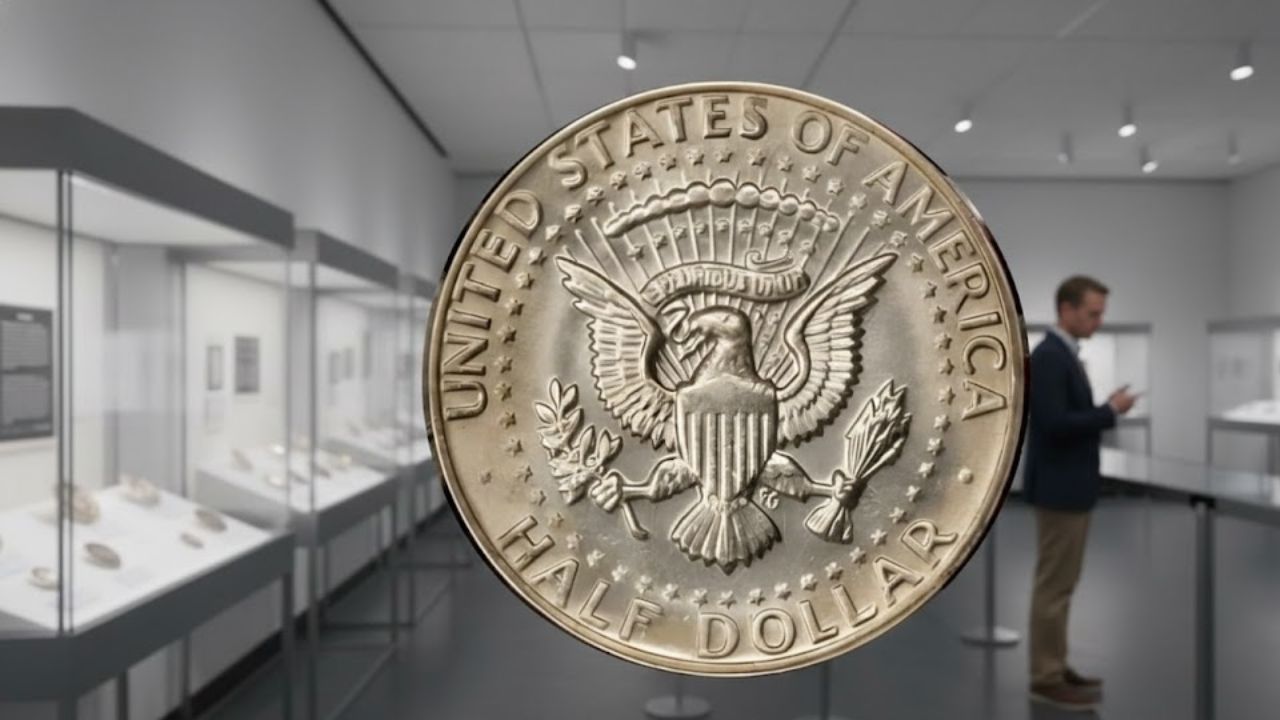
5 Rare Half Dollars Worth: Coin collecting brings together history, craftsmanship, and the excitement of discovery. Among American coins, half dollars stand out as large, impressive pieces that often carry remarkable stories and surprising values. While many people overlook them in everyday change, certain rare half dollars have sold for staggering amounts, sometimes nearing half a million dollars. What makes this even more fascinating is that condition alone does not determine value. Even coins that appear worn or tarnished can command extraordinary prices if they are rare enough.
Five Rare Half Dollars Worth Up to $500,000
| Coin | Year | Mint Mark | Key Feature | Potential Value |
|---|---|---|---|---|
| Flowing Hair Half Dollar | 1794 | None | First year design, extremely low survival rate | Up to $500,000+ |
| Capped Bust Half Dollar | 1838 | O | New Orleans test issue, very few known | Up to $500,000 |
| Walking Liberty Half Dollar | 1919 | D | Rare in mint state grades | $100,000+ |
| Walking Liberty Half Dollar | 1921 | S | Low mintage, scarce in all grades | $100,000–$300,000+ |
| Kennedy Half Dollar Special Strike | 1964 | None | Rare prototype finish | Up to $500,000 |
Why Half Dollars Hold a Special Place in U.S. Coin History
The half dollar has long carried a sense of prestige in American coinage. Larger than most circulating coins, it has featured some of the nation’s most admired designs. From the early Flowing Hair motif of the 1790s to the elegant Walking Liberty and the enduring Kennedy portrait, these coins reflect the artistic and cultural spirit of their times.
Because half dollars were not always produced in massive quantities, certain issues became scarce over the years. As coins were lost, melted, or heavily circulated, surviving examples grew rarer. That scarcity, paired with historical importance, is what drives their remarkable market value today.
The Power of Rarity Over Condition
In coin collecting, condition often plays a major role in pricing. A coin with sharp details and no wear generally commands higher prices. However, rarity can outweigh even the finest condition. If only a handful of examples exist, collectors are willing to compete fiercely for ownership, even if the coin shows age or wear.
This explains why an old, darkened half dollar sitting in a drawer could potentially be worth a small fortune. The true value lies in how many were made and how many still survive.
1794 Flowing Hair Half Dollar
The 1794 Flowing Hair half dollar represents the earliest chapter of United States coinage. Featuring Liberty with flowing hair on the front and a small eagle on the reverse, it symbolizes the young nation’s beginnings.
Only a limited number were struck, and far fewer remain today. Its historical status as one of the first half dollars ever minted gives it enormous appeal. Even examples with visible wear have achieved prices in the hundreds of thousands of dollars at major auctions.
1838 O Capped Bust Half Dollar
The 1838 O half dollar is one of the most legendary rarities in American numismatics. Produced at the New Orleans Mint as a special test issue, only a tiny number were created. Today, fewer than ten examples are believed to exist.

Collectors consider it a crown jewel of the Capped Bust series. Because of its extreme scarcity, auction prices have approached half a million dollars. Regardless of condition, its rarity alone secures its place among the most valuable half dollars ever produced.
1919 D Walking Liberty Half Dollar
The Walking Liberty half dollar series is admired for its graceful design, showing Liberty striding toward the rising sun. While many dates in the series are accessible to collectors, the 1919 D issue stands out as particularly elusive in high grades.
Circulated pieces can be found, but mint state examples are exceptionally rare. When one appears at auction in top condition, bidding can climb well into six figures. Even well-worn examples are worth significantly more than their face value due to demand.
1921 S Walking Liberty Half Dollar
Another challenging date in the Walking Liberty series is the 1921 S half dollar. Struck in San Francisco with a notably low mintage, it remains scarce across all grades.
Collectors seeking to complete a full Walking Liberty set often struggle to secure this date. High-grade specimens have sold for hundreds of thousands of dollars, while even heavily circulated examples carry substantial premiums.
1964 Kennedy Half Dollar Special Strike
Introduced in 1964 to honor President John F. Kennedy, the Kennedy half dollar quickly became a symbol of national remembrance. Most 1964 halves are common, but a small number of special strike coins were produced with distinctive finishes.
These rare prototype pieces are highly coveted. Because so few exist, collectors have paid extraordinary sums to acquire them, sometimes nearing $500,000. Their unique production characteristics make them stand apart from regular circulation strikes.
How to Identify Valuable Half Dollars
Recognizing valuable half dollars begins with understanding key dates and mint marks. The letter O indicates New Orleans, D represents Denver, and S stands for San Francisco. Careful examination of these small details can reveal whether a coin is ordinary or potentially rare.
Collectors should consult reliable reference guides and compare coins to verified examples. Subtle differences in finish, strike quality, or mint mark placement can significantly influence value.
The Importance of Professional Authentication
Because rare half dollars can command such high prices, counterfeit examples do exist. Professional grading services play a critical role in confirming authenticity and assessing condition.
Having a coin certified not only protects buyers and sellers but also enhances confidence at auction. A properly authenticated coin often achieves stronger prices due to the trust it inspires in the marketplace.
Auction Records and Market Trends for Rare Half Dollars
Auction houses regularly feature key half dollars that attract global attention. Historical sales show that coins like the 1794 Flowing Hair and 1838 O Capped Bust halves have realized impressive prices.
Interest in rare American coins remains strong, with new collectors entering the hobby each year. As demand increases and supply remains limited, values for top-tier rarities continue to show upward momentum.
Collecting Strategies for Rare Half Dollars
Some collectors aim to complete entire series, such as Walking Liberty or Kennedy halves. Others focus exclusively on acquiring key rarities with strong investment potential.
Setting a budget and purchasing the finest quality coin within that budget is often wise. Patience is equally important. Rare coins do not appear every day, and waiting for the right opportunity can make a significant difference.
Preserving Rare Half Dollars for Long-Term Value
Proper storage is essential to maintain a coin’s condition and worth. Coins should be kept in protective holders designed for long-term preservation. Handling should be minimal, and exposure to moisture or extreme temperatures should be avoided.
By safeguarding rare half dollars carefully, collectors help ensure that these historical artifacts remain intact for future generations.
The Legacy and Final Verdict on Rare Half Dollars Worth Up to $500,000
Rare half dollars represent far more than their face value. They capture moments from America’s past and showcase the artistry of their time. Coins such as the 1794 Flowing Hair, 1838 O Capped Bust, 1919 D Walking Liberty, 1921 S Walking Liberty, and 1964 Kennedy special strike have achieved values approaching or exceeding $500,000 due to their scarcity and historical importance.
For collectors, the appeal lies in both the financial potential and the connection to history. Even coins that appear old or worn may hold extraordinary worth if they are genuinely rare. The search for these hidden treasures continues to inspire enthusiasts across generations.
Disclaimer
Coin values fluctuate based on market demand, condition, and authentication. The prices mentioned are based on past auction results and may vary over time. Always consult a certified numismatic expert or professional grading service before making buying or selling decisions.
