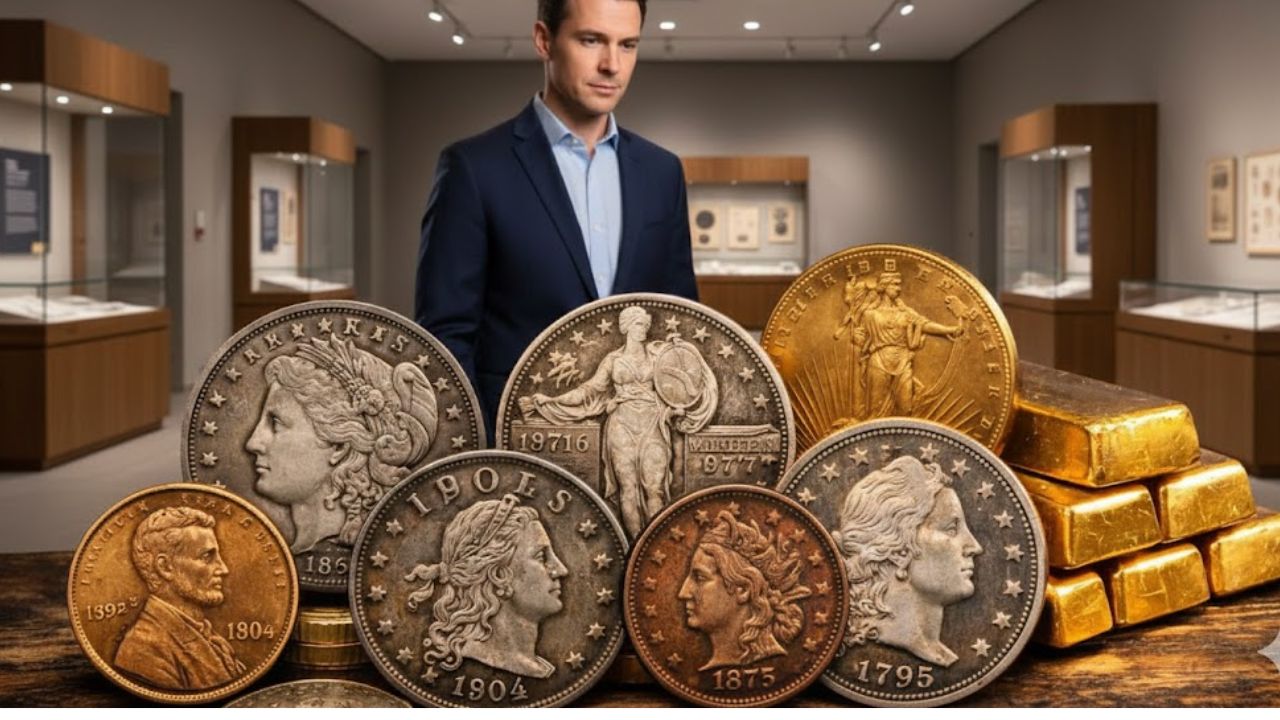
8 Legendary U.S. Coins in 2026: The field of numismatics continues to attract collectors and investors who recognize that some historic coins are worth far more than their metal content. In 2026, while gold prices remain strong, several rare U.S. coins consistently command record-breaking auction results. Their value comes from limited survival numbers, historical importance, minting mysteries, and global collector demand. These coins are not simply currency; they are preserved moments of American history.
Top Rare U.S. Coins and Their 2026 Market Significance
| Coin | Year | Known Examples | Why It Is Valuable | Estimated 2026 Value |
|---|---|---|---|---|
| Double Eagle | 1933 | Fewer than 15 | Gold recall history, never officially circulated | $10 million+ |
| Flowing Hair Silver Dollar | 1794 | Extremely limited | First U.S. silver dollar | $10 million+ |
| Liberty Head Nickel | 1913 | 5 | Unauthorized striking mystery | $4–6 million |
| Draped Bust Silver Dollar | 1804 | 15 | Diplomatic issues, elite rarity | $4–8 million |
| Seated Liberty Dollar | 1870-S | 1 | Only known example | Priceless |
| Copper Penny | 1943 | Fewer than 20 | Wartime mint error | $250,000–$1 million+ |
| Half Eagle | 1822 | 3 | Two in Smithsonian, one private | $8 million+ |
| Flying Eagle Cent | 1856 | About 2,000 | Pattern coin transition | $15,000–$30,000+ |
Throughout modern auctions, these historic coins regularly outperform bullion because they represent scarcity that cannot be recreated.
1933 Double Eagle
The 1933 Double Eagle stands as one of the most famous coins ever produced by the United States Mint. Created during a period of economic turmoil, these $20 gold coins were never released after the government halted gold circulation. Nearly all were melted, yet a few survived. Their dramatic backstory and legal history have made them legendary. Today, they are considered crown jewels in American numismatics, with prices reaching extraordinary levels.
1794 Flowing Hair Silver Dollar
Recognized as the first silver dollar issued by the United States, the 1794 Flowing Hair Silver Dollar reflects the identity of a young republic. Its design showcases Liberty with flowing hair and an early eagle emblem. Only a small number were minted, and far fewer remain in exceptional condition. Collectors prize it not only for scarcity but for its role in establishing the nation’s coinage system.

1913 Liberty Head Nickel
The 1913 Liberty Head Nickel is one of the most intriguing rarities in American coin history. With only five known examples, its origin remains debated among historians. Whether struck secretly or produced as a test issue, its mystery enhances its appeal. Whenever one appears for sale, it attracts international attention and multi-million-dollar bids.
1804 Draped Bust Silver Dollar
Often referred to as the King of American Coins, the 1804 Draped Bust Silver Dollar holds a unique place in collecting circles. Although dated 1804, most examples were actually struck years later for diplomatic gifts. With only fifteen confirmed pieces, each carries documented ownership history. Its combination of rarity and prestige makes it one of the most sought-after coins in existence.
1870-S Seated Liberty Dollar
The 1870-S Seated Liberty Dollar is a true numismatic mystery. Official Mint records once indicated that none were produced, yet one example surfaced. As the sole known specimen, its value is essentially beyond calculation. Its existence highlights the unpredictable discoveries that keep collectors fascinated.
1943 Copper Penny
During World War II, the United States Mint produced steel cents to conserve copper for military use. However, a small number of copper blanks were mistakenly struck in 1943. These rare error coins have become legendary. Although they carry a one-cent denomination, authenticated examples have sold for astonishing sums, proving how minting mistakes can become valuable treasures.
1822 Half Eagle
The 1822 Half Eagle is one of the rarest early American gold coins. Only three specimens are known today. Two are preserved in the Smithsonian Institution, leaving a single example in private ownership. Its extreme scarcity ensures immense collector demand whenever it is discussed or displayed.
1856 Flying Eagle Cent
The 1856 Flying Eagle Cent was created as a pattern coin to introduce a new smaller cent design. Roughly 2,000 pieces were distributed for evaluation rather than widespread circulation. Over time, it became a key transitional coin in U.S. history. Its blend of limited mintage and historical importance keeps it highly desirable.
Why Rare U.S. Coins Surpass Gold
Gold is valued primarily for weight and purity, but rare U.S. coins combine intrinsic and historical value. Their limited survival, artistic design, and compelling backstories create demand that extends beyond bullion pricing. Unlike gold bars, these coins cannot be reproduced or mined again. Their uniqueness protects their long-term appeal.
The Collector’s Perspective in 2026
Collectors today view rare American coins as cultural assets as much as financial investments. Auctions for these treasures draw worldwide interest, with buyers competing for pieces that represent exclusivity and historical significance. Owning such coins is often considered a milestone achievement within the numismatic community.
Final Verdict on Rare U.S. Coins
In 2026, rare U.S. coins continue to outperform gold because they represent scarcity, heritage, and craftsmanship. While gold remains a stable store of value, these historic coins hold an additional layer of desirability that transcends metal prices. For serious collectors and investors, they symbolize both legacy and long-term potential.
Disclaimer
Values mentioned are approximate 2026 market estimates based on public auction trends and collector demand. Coin prices vary depending on condition, authentication, grading, and market conditions. This article is intended for informational purposes only and should not be considered financial or investment advice.
